
UX Framework Architecture | Competitive Intelligence | Strategic Facilitation | Fintech Benchmarking
DBS Private Banking: Digital Benchmarking Strategy
Defining a high-precision framework to navigate the digital transformation of private wealth management.Key Objective: To transform raw competitor data into actionable business intelligence, focusing on high-complexity areas like portfolio health and risk rebalancing.
Challenge:
How might we architect a scalable benchmarking framework that identifies critical UX gaps and high-value opportunities, allowing the bank to differentiate its digital offering in an increasingly competitive private banking landscape?
The Client:
DBS Private Bank
DBS Private Bank
My Role:
Lead UX Strategist & Framework Architect
I designed the benchmarking methodology and led stakeholder alignment to define the bank’s competitive digital roadmap.
Lead UX Strategist & Framework Architect
I designed the benchmarking methodology and led stakeholder alignment to define the bank’s competitive digital roadmap.
The Delivery:
- Benchmarking Framework Design: Developed a scalable methodology to audit 7 global private banks and 50+ specialized functions, ranking them with a proprietary scoring system.
- Executive Stakeholder Alignment: Orchestrated high-velocity design thinking workshops to gain commitment on four critical pillars: Risk Rebalancing, Portfolio Health, Customer Education, and Acquisition Journeys.
- Evidence-Based UX Audit: Led a comprehensive heuristic evaluation to highlight usability issues and unique market offerings, providing actionable recommendations for product differentiation.
- Journey Mapping & Auditioning: Extracted and visualized detailed customer journey screen flows from existing client platforms to identify competitive gaps.
The Impact:
🚀 Defined Strategic Intelligence: Provided the executive team with a prioritized feature backlog based on rigorous competitive scoring and usability gap analysis.
🚀Stakeholder Velocity: Accelerated the decision-making process through focused Miro workshops, moving from brainstorming to a finalized framework despite tight timelines.
🚀 Market Differentiation: Identified specific "Blue Ocean" opportunities in Risk Rebalancing and Portfolio Health to help the bank leapfrog existing market offerings.
🚀 Operational Scalability: Delivered a repeatable benchmarking methodology that internal teams can now use for ongoing digital audits and performance tracking.
(Synpulse Global BD Award)
🚀 Defined Strategic Intelligence: Provided the executive team with a prioritized feature backlog based on rigorous competitive scoring and usability gap analysis.
🚀Stakeholder Velocity: Accelerated the decision-making process through focused Miro workshops, moving from brainstorming to a finalized framework despite tight timelines.
🚀 Market Differentiation: Identified specific "Blue Ocean" opportunities in Risk Rebalancing and Portfolio Health to help the bank leapfrog existing market offerings.
🚀 Operational Scalability: Delivered a repeatable benchmarking methodology that internal teams can now use for ongoing digital audits and performance tracking.
(Synpulse Global BD Award)
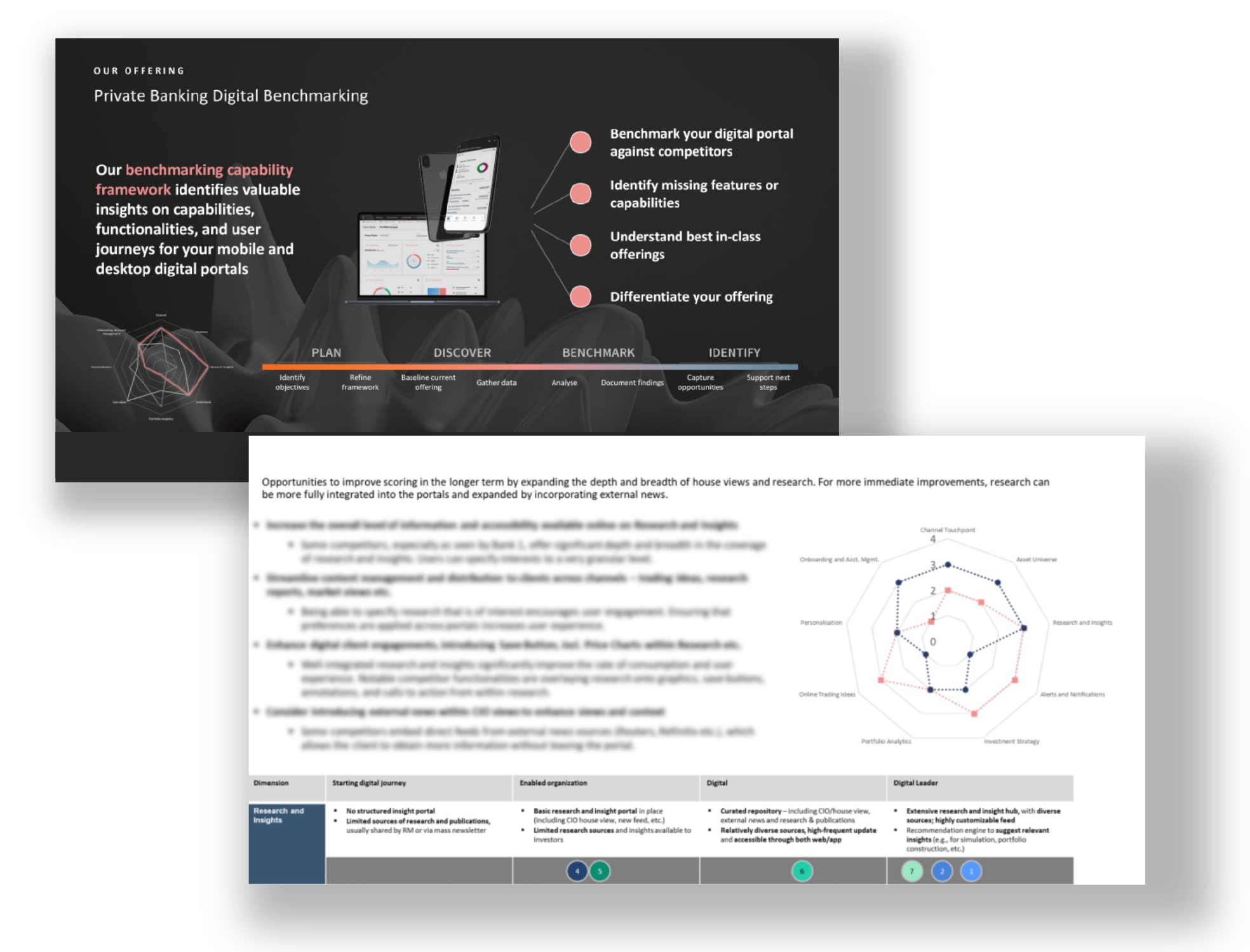
Workshop Facilitation
Workshop #1
In a two-hour workshop, we decided to focus on the benchmarking framework from key dimensions in the private bank industry.
We made a quick decision to get commitment among stakeholders on focused topics and to be able to act strategically despite time.

Collabration tool: Miro
Benchmarking key dimensions
By reviewing the existing key dimensions, we brainstormed additional focused dimensions and priorities them in just 15 minutes.
- Risk rebalancing advice
- Health check portfolio
- Customer education/ comfort on products
- Acquisition journey
Essential insights/ highlights for each function
To understand each lever’s insights, highlights, and functions, we ran 9 tasks to brainstorm in-depth ideas with stakeholders,
aligning focused areas to make sure the framework setting meets client's expectations
Workshop outcome
Benchmarking framework in Primary Deep Dive Area/ Secondary Research Areas/ Tertiary Research
Workshop #2
In a one-hour workshop, we aligned the top 3 journeys for benchmarking UX journey.
We extracted extra insights from the existing client platform and put them in the benchmarking framework
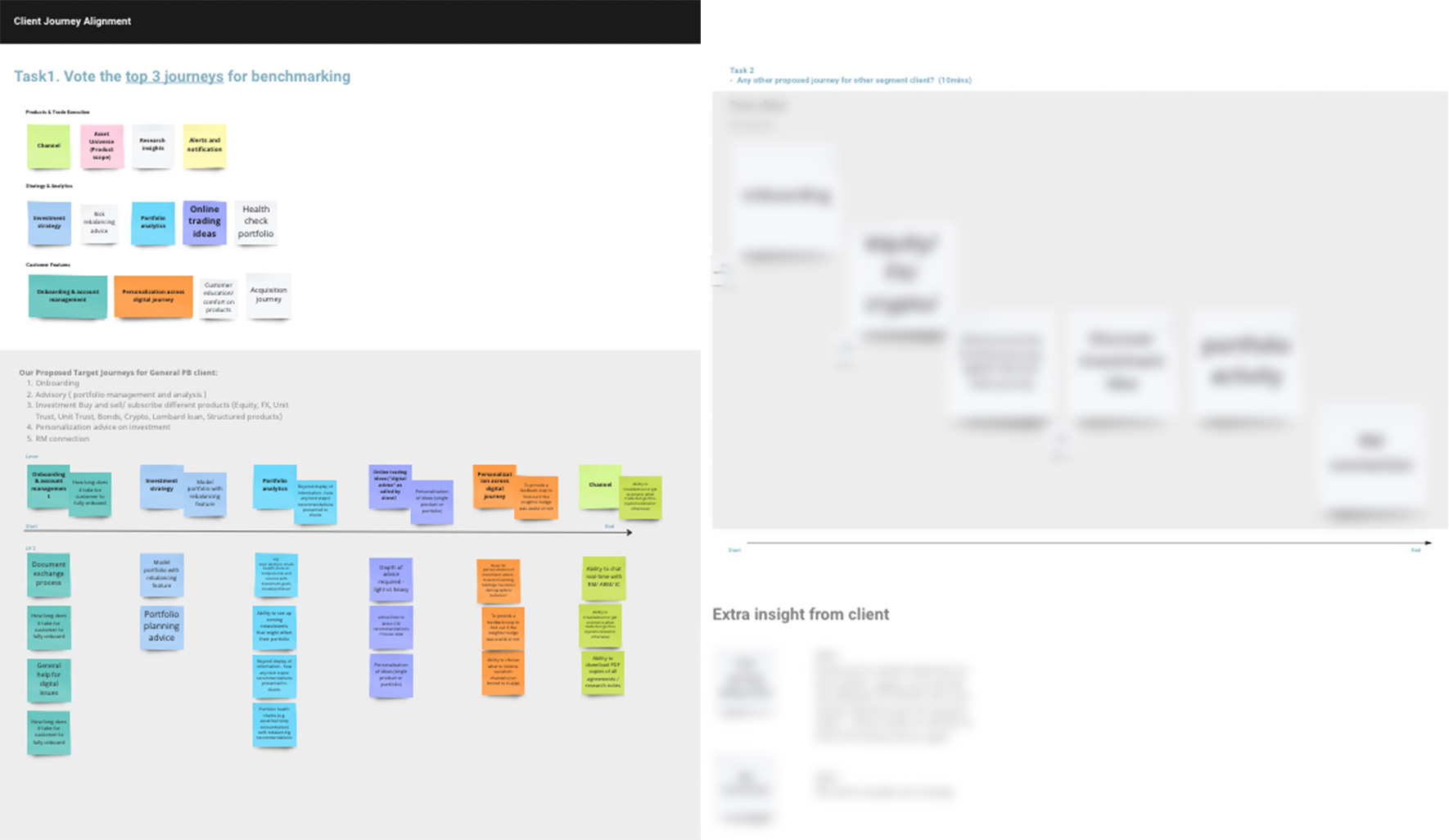
Workshop outcome
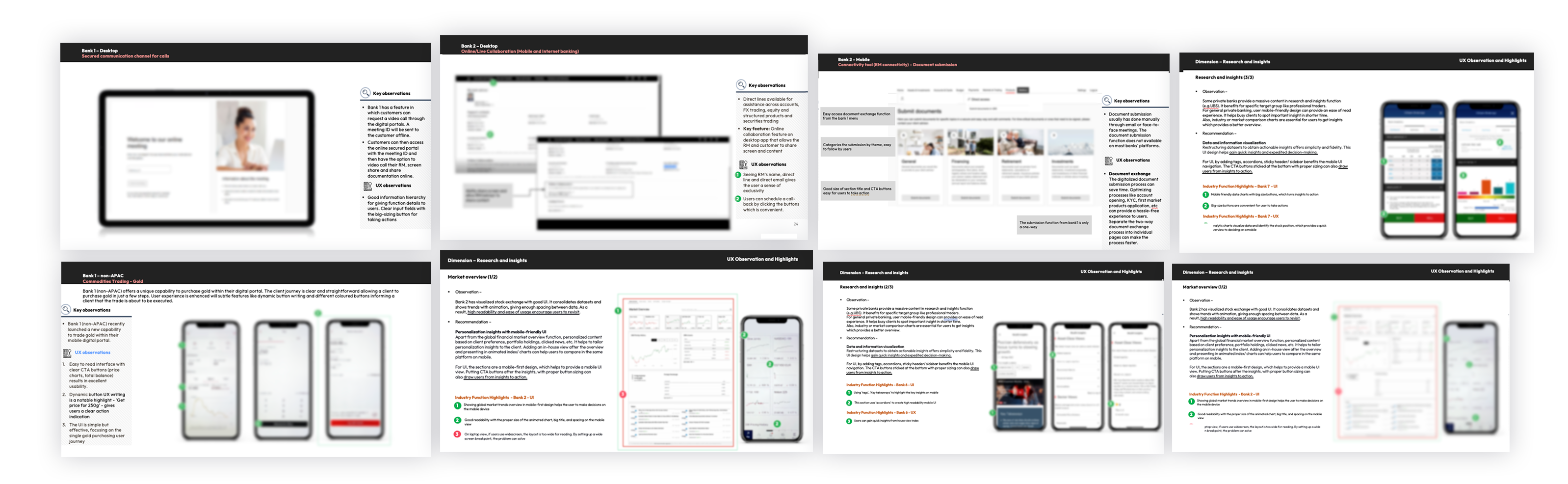
Detailed customer journey screen flow for audition
UX Audit: Conduct Heuristic Evaluation
We went through 7 private banks’ digital platforms and over 50 functions. We highlighted usability issues, unique functions, and offerings. We ranked the competitors' key dimensions with scores and provided recommendations to our client based on our findings.
The Strategic Output: Intelligence-Driven Roadmap
How we transformed competitive data into a validated investment strategy?1. Designing the Benchmarking Methodology
Instead of a standard UI audit, I architected a high-rigor framework to capture both functional breadth and experiential depth.
Multi-Channel Audit: Analyzed 7 global competitors across mobile and internet banking platforms within APAC and non-APAC markets.

Dual-Layer Data Capture: Combined direct product access with client conversation insights to ensure the data reflected both technical capabilities and real-world user pain points.
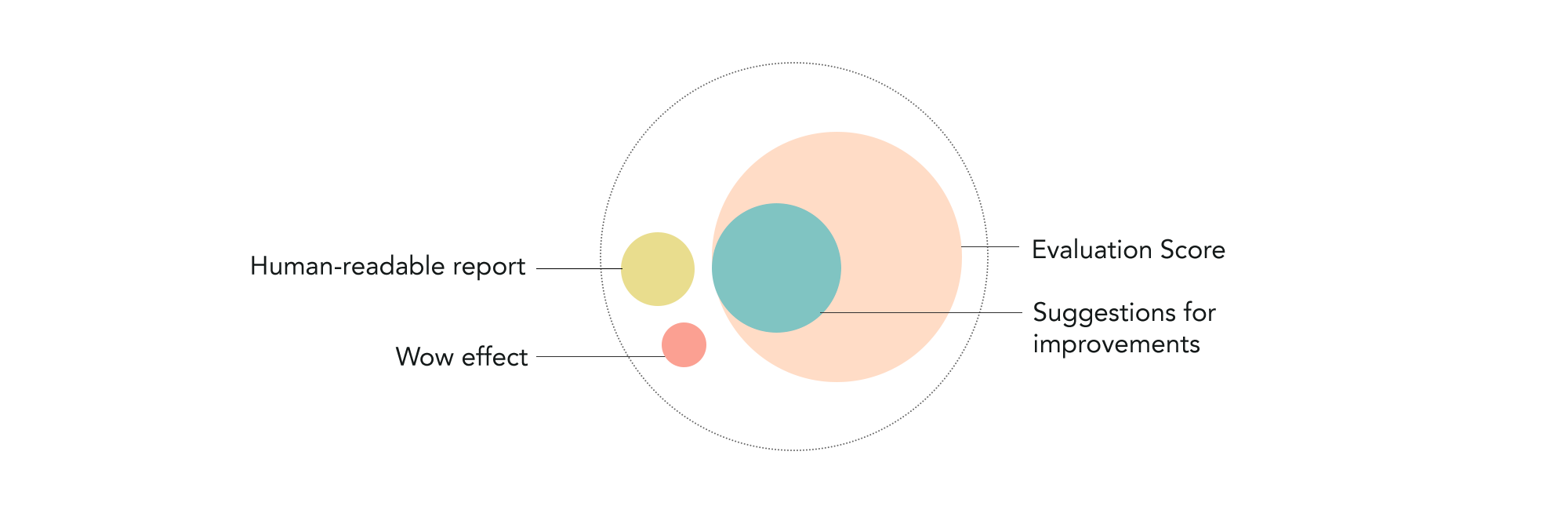
Qualitative Scoring System: Established a "Quality Metric" to measure the depth and breadth of features, moving beyond a simple "yes/no" checklist to evaluate the actual sophistication of the offering.

Sample of quality metric
2. Strategic Results & Performance Gap
By applying this systematic scoring, we moved from subjective opinions to objective business metrics:
17 high-value features
Functional Gap Identification:
I dentified 17 specific high-value features currently offered by competitors that represent immediate opportunities for DBS.
54/100
Performance Benchmarking:
Quantified the current state, scoring the platform 54/100 against a peer average of 69, providing clear evidence for the necessity of a product revamp.
3. The Recommendation Framework
A benchmarking report is only valuable if it is actionable. We delivered 21 prioritized recommendations, each evaluated through a "Business-UX Matrix":Monetization Potential:
Identifying features that drive direct revenue.
Identifying features that drive direct revenue.
Time-to-Market:
Assessing technical feasibility and rollout speed.
Assessing technical feasibility and rollout speed.
Client Experience Impact:
Ensuring every roadmap item significantly improves user satisfaction.
Ensuring every roadmap item significantly improves user satisfaction.